Adsense

Showing posts with label mushrooms. Show all posts

Thursday, February 5, 2015

Cultivating mushrooms

Cultivating mushrooms can be very troublesome. Every species of mushroom has a certain climate they like so some mushrooms are considered almost impossible to cultivate indoors, while some are simply impossible. Some easy mushrooms to start cultivating  are oysters (Pleurotus ostreatus) by using colonized plugs in logs. Before getting into ways of cultivation, here are some crucial tools required for the process.
- Pressure cooker/canner
- Sterile inoculation box
- Flame or oil lamp
- Sterile environment clean as possible
- Sanitizing wipes
- Spore syringes
Some of these tools can cost a lot of money but make the process much more effective in the end. It's important to have a clean environment through every step to avoid contamination.
This means all counters and floors in the room you sterilize jars in the pressure cooker, and also inoculating jars. After letting jars cool in the cooker, you should immediately move them to your inoculation box. Sterilize your syringe or syringes by wiping the outside completely and also heating the tip until it gets red hot to kill any bacteria. After the whole syringe is sterile out it in with the jars and use your sterile gloves to inoculate your jars. Later you must place your jars in a dark area at a temperature appropriate to your species. Days later, you should see colonization and after 100% you must dunk in cool water and transfer to substrate of choice. This is when people use a myriad of ideas to make either bulk amounts, or do a small grow for lesser amounts but takes less space.

Tuesday, February 3, 2015

Magic Mushroom habitat

There are a few distinct areas that are perfect mushroom habitats, that also goes the same with magic mushrooms as well. A few very notable areas for magic mushrooms include but not limited to; landscaped areas, clear cuts, riparian zones, farm land, dune grasses. Every single psilocybe mushroom has a different habitat except the woodlovers which can be found side-by-side. Before you head out in search of magic mushrooms, you should study what things to look for in a habitat. That way you don't waste time looking in every single area possible. You'll be able to dial in on mushroom hotspots over time and a quick glance could lead to your next jackpot. The very first area I went to was landscaped areas. Man-made destruction at its finest, everything changed to a cookie cutter image of what it "should" be like. Woodchip paved paths and salal recapturing logged areas are really good spots to check.

Lawn Mushrooms

Many people wonder what mushrooms are growing on their lawn. There are wide variety from fly agaric to panaeolus all the way to mycena. Sometimes mushrooms can be a landscapers nightmare as they seem to never go away. The best ways to get rid of mushrooms is not to just yank them all up, that will not do much since the mycelium is underground. But since the spores help reproduce, throwing the ones you find away may help. One thing i have noticed is, mushrooms do not reproduce well when the acidity of the soil is too high but still may return later in the year. Other ways that landscapers have resorted to includes fungicides, reducing humidity and digging areas up. This may be a bit extensive and the battle will seem like a loss. Sometimes mushrooms always win.

Mushrooms poisonous to dogs

Often times dog owners worry about mushrooms that their dog has eaten. Some mushrooms may be very serious, but most are no worries. If your dog has eaten a possibly poisonous mushroom, the best thing may be is to find where he/she ate it and collect a specimen. This will give veterinarians an idea of what it ate. You also can refer to mushroom forums with various features of such mushroom in hopes to get it identified, Although there are poisonous mushrooms in this world, usually dogs will not eat any mushrooms at all. Some dogs have been known to be bred for hunting mushrooms so they may as well be able to tell the difference between poisonous and edible with their super smelling senses.


Monday, February 2, 2015

5 Tips and secrets to mushroom hunting success

So since I've been talking about mushrooms and hunting so much, I may as well be helpful to the readers and give a few tips to help you when you do decide to take an adventure of your own. Some of these won't be as much of a secret to some people. But hey, knowledge is power.
1: Rain. You must wait for a few days of precipitation, you'll find much more because mushrooms are practically 90% water. Unlike plants, mushrooms don't need sunlight.
2: Disturbances. Not only the casual creek or river, but also includes logged roads and any man-made destruction. Fungi thrives in these areas because of the freshly available nutrients.
3: Trees: Many mushrooms are mycorhhizal meaning they grow from roots of trees. Study your tree types and it will help in the long run when looking for certain mushrooms.
4: Bike. Believe it or not, traveling short distance in hunting grounds allows covering larger amounts of area that you normally couldn't on foot. Sometimes you also miss smaller mushrooms though.
5: Elevation. Early in season if conditions are optimal, higher elevations will host climates suitable before normal picking times. This formula works the same way as late season when mushrooms can be found near sea level. Often people don't bother checking, but the early bird always gets the worm!

Mushroom identification

Mushroom identification to the average person seems difficult at first. But luckily, in this time we are in the the age of information and plenty of articles or books can be found. Some good websites for people starting out are mushroomobserver.org where people can vote on the species mushroom you've found. Also, shroomery.org message forums are a great place for help for much of anything concerning fungi. Other various forums work well too but sometimes it may take a bit of getting to know people before you get help. Books can be bought on Amazon or at local book stores. I've felt quite confident myself while using a field guide mushroom hunting. The descriptions of habitats helps quite a lot as well. Most books contain simple keys to identification, plus location of your discovered fungi helps zero down the possible choices. Still, some mushrooms require microscope work for further measurements in order to identify.

Sunday, February 1, 2015

Psilocybe cyanescens, a video

I found these all growing downhill and had to take a video. Don't forget to hit the like or subscribe button if you liked it. :)


These were found near the edge of a conifer line in an extremely public park. This season, the patch has been going since November and I've still been finding a few every week I go. Psilocybe mushrooms; especially cyanescens, really like public and lots of traffic. I've noticed with this patch in certain there was always deer poop and some of the woodchips moved away which makes me think either squirrels or deer are the reason they have spread to this location. Sometimes the busiest areas host them and nobody bothers, meanwhile others will rip them up at first glance.

Mushroom indentification for everyone

So you're probably wondering how to figure out exactly which mushrooms are good and what is bad? The first step would be getting a book. Libraries have been known to have mushrooms books but are rarely in stock. The best place I would recommend is Amazon. A few good authors are Paul Stamets, David Aurora and Gary Lincoff. They all have various books for areas as some states wont have the same mushrooms. "All that rain promises and more" by David Aurora was my first book and it pretty much covered everything that I came across for the most part. A better, more in-depth book by the same author is "Mushrooms Demystified". Its almost too much information to take in all at once but a great guide that includes it all.


Psilocybe pelliculosa

Psilocybe pelliculosa are saprophytic found mostly on decaying alder woods near clear cut areas. These "magic" fungi do not mind frost as much as many other mushrooms do, making them more relevant in higher and lower elevations near end of fall. Often these are found in large groups or clusters rarely cepitose, but possible. Alike Psilocybe semilanceata, pelliculosa also have a separable pellicle.


cepitose - singular; or stand-alone
separable pellicle - transparent tissue overlayed on cap

Jelly mushrooms

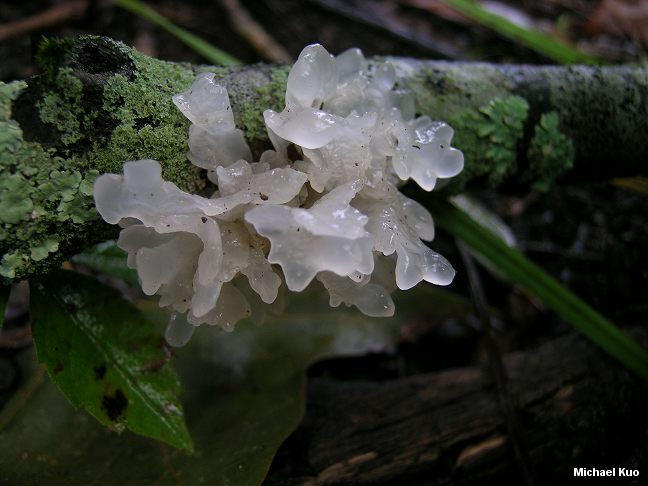
Jelly mushrooms belong to a wide diverse group in the basidiomycetes. Many species must be closely evaluated under microscope before determining. Most jelly fungi swell when it rains, then shrink back up during warm periods or sun. Notable jelly mushrooms are Tramella fuciformus and Pseudonym gelatinosum. Also included in jelly mushrooms are slime molds. Technically they aren't mushrooms or even fungi, but still occur in this category.

Above: Tramella fuciformus

Ganoderma applanatum (Artist's Conk)

Ganoderma applanatum are really interesting mushrooms being both parasitic and having medicinal properties. Artists conks are probably one of the most widely distributed mushrooms, most commonly found on fallen fir trees. Usually when parasitic, these conks attack bases of trees and later can be found along the tree, sometimes saprobic. The medical value of these mushrooms are comparable to that of Ganoderma lucidium (or shaga). Some being, anti-tumor, anti-inflammatory, anti-carcinogenic, and reducing phlegm. Ganoderma have been consumed by forum of tea for decades, possibly centuries ago. Often it is ground up and added to tea, then strained. One person who swears by its effects said, "You can feel its medicinal properties start working almost instantly like waves".


Wednesday, January 28, 2015

Pseudonym gelatinosum

The other day I was inspired by a friend informing me about Pseudonym gelatinosum. Pseudonym gelatinosum is a jelly mushroom that lacks much flavor and has a gelatin feel and appearance to it. The underside of the cap has these small teeth-like spines and appears to need a shave. These jelly mushrooms are saprobic on woody debris or well decayed conifer logs. I kept finding them near extremely mossy hillsides facing towards the direction of sun rise.


These mushrooms are known to be made into candy, jellies and soups. Most west coast versions of jelly mushrooms are edible, but some must be cooked before eating.

Saprobic - feeds on decaying or dead organic matter

Tuesday, January 27, 2015

How I first got interested in mushrooms

When I was young, I never thought of going "mushroom hunting". I would notice the occasional fungus while playing baseball, or while hiking. But I never knew there were people that actually took trips to the wild in search of certain mushrooms. Well that was until I was about 16 years old when one of my friends called me up in excitement that he had found someone with mushrooms. I wasn't into psychedelics as a young adult, I already thought weed was the devils drug when I was a kid; and shrooms seemed absolutely horrible; but at the same time I wasn't against people who chose to. So I laughed and asked him a few questions about them. Turns out, the provider had picked these mushrooms themselves. I don't know about you, but that interested the deepest part of my mind. What else is out there? Drugs grow right out of the ground? How can this be real... So I set out to find every bit of information on wild mushrooms in my state. At the age of 16, me and my friend both found our first wild magic mushrooms. They were nestled back in a public park right off the Puget sound. One...two...three mushrooms were found. We giggled in excitement as we realized we had just found one of the most sought after species of mushrooms. This was just the beginning though, as that friendship was lost because of something as simple as drugs. In my mind, mushrooms themselves meant more to me than revealing where I had found my next patches; even if it meant losing friends.
Nowadays I go mushroom hunting as a way to get fresh air and cleanse my mind of all that society has put in it. I can do what I want in the forest, its my domain, my clean slate, my one and only hobby that I can teach myself and be taught by the mushrooms at the same time. Nobody else can tell me "how" to mushroom hunt, there's no certain way of "how" to, it's just instinct and pure luck mixed with educated guesses based on habitats and indicators. Mushrooms have a way of speaking by nature. And nature is serene.

Monday, January 26, 2015

Amanita muscaria

Amanita muscaria are some of the most controversial mushrooms.Most people believe that they contain poison but actually is a deliriant of sorts. These red and white toadstools became popular after being depicted with Christmas themes. Reindeer were thought to have eaten them to be able to fly. There is much fantasy talk about them. 

Above: Button form possible Amanita muscaria var. guessowii
Below: Fully grown

Its no wonder such fairy tales have been made. These mushrooms are mystical and you can tell just by looking at them. 

Updates in progress... Under construction...

So as you can tell, this blog is just now starting up recently. I strive to photograph all of the mushrooms that I can possibly find. Each mushroom has some beauty in it, but not every mushroom is edible. I'll be doing more work here soon and sharing many pictures that I have taken throughout the last few years. Here's just a sample of what is to come.

Above: Psilocybe cyanescens; very potent psychedelic
Below: Gymnopilus luteofolius; mildly psychedelic

As I mentioned above, not all mushrooms are edible. As this mushroom below is considered toxic. For years people believed Paxillus involutus was edible if cooked thouroughly, but folk were wrong as some had allergic reactions and fell very ill. Sometimes dying. Although mushrooms can be poisonous, its quite easy to become aware with the bad as you study further into mycology. Mushroom books create a safe haven for identification along with various websites that host forums for identification, (I.E. Shroomery.org).

Above: Paxillus involutus; poisonous, can be fatal
Below: Galerina Autumnalis; very deadly


Chanterelle hunting in early fall


By far one of my favorite mushrooms to hunt for, is the Chanterelle. Its fresh apricot smell and the bright orange almost gold as a bell as it pushes up through the forest floor. Chanterelles are usually found near old logging roads where pines have been cut. The biggest yields I've found were near slopes in these previously described areas. They will grow as far as 20 feet or more in large amounts. As season gets toward the middle, they can be found at lower elevations in parks as well. I was surprised when I discovered over 50 chanterelles at a park in South Hill area of Puyallup. Much different than my usual hunting areas in the mountain parks.

Above: A trail of chanterelles can be found if you're the lucky person to be first in the area
Below:  The usual habitat for good amounts of chanterelles
Below: Large harvest done in the prime of season.

So you're probably wondering what exactly I did with all of these mushrooms. I gave some away to family members, then I made a bunch of chanterelle soup! Recipe is below. I also took a picture of what it turned out to be like. It was the best soup I've probably ever had in my life. No joke.

http://www.seriouseats.com/recipes/2014/01/creamy-chanterelle-soup-recipe.html


Wednesday, May 14, 2014

Go by a strict code of morels

Spring is a great time for fungi to flourish in the PNW with the late winter storms and increasing heat. One of them being the famous morel. Morels are the most sought after mushroom of them all. They are considered choice edible. Early spring you can find half-free morels and yellow morels near cottonwoods and dried streams. My favorite however, are burn morels or morchella elata. They thrive where wildfires have devastated forests, mostly in higher elevations. My dad and I went in search of these famous fungi and ended up getting a good haul. Some we found in holes where tree trunks were pulled during firefighting efforts. 


Below: Massive flushes all over the area and some just exploding


Monday, May 12, 2014

Welcome

Hello, I'm an avid mushroom hunter and I'm going to be posting all my pictures on here and talking about the adventures that I embark to find mushrooms of all kind. I usually just go looking in all types of terrain whether mountains, trails, rivers, lakes, streams, meadows or forests. Some species, however, are more set in habitat or growing mycorrhizal with trees. For example, these chanterelles love to grow underneath pine trees before the hard freeze of winter. This last year was amazing for chanterelles. Upon finding one, you could find multiple flushes nearby.


These are called Cantharellus formosus or commonly known as the pacific golden chanterelle.


Mycorrhizal - A symbiotic (generally mutualistic, but occasionally weakly pathogenic) association between a fungus and the roots of a vascular plant.