

Showing posts with label washington. Show all posts
Showing posts with label washington. Show all posts
Sunday, February 1, 2015
Mushroom indentification for everyone
So you're probably wondering how to figure out exactly which mushrooms are good and what is bad? The first step would be getting a book. Libraries have been known to have mushrooms books but are rarely in stock. The best place I would recommend is Amazon. A few good authors are Paul Stamets, David Aurora and Gary Lincoff. They all have various books for areas as some states wont have the same mushrooms. "All that rain promises and more" by David Aurora was my first book and it pretty much covered everything that I came across for the most part. A better, more in-depth book by the same author is "Mushrooms Demystified". Its almost too much information to take in all at once but a great guide that includes it all.


Psilocybe pelliculosa
Psilocybe pelliculosa are saprophytic found mostly on decaying alder woods near clear cut areas. These "magic" fungi do not mind frost as much as many other mushrooms do, making them more relevant in higher and lower elevations near end of fall. Often these are found in large groups or clusters rarely cepitose, but possible. Alike Psilocybe semilanceata, pelliculosa also have a separable pellicle.


cepitose - singular; or stand-alone
separable pellicle - transparent tissue overlayed on cap


cepitose - singular; or stand-alone
separable pellicle - transparent tissue overlayed on cap
Jelly mushrooms
Jelly mushrooms belong to a wide diverse group in the basidiomycetes. Many species must be closely evaluated under microscope before determining. Most jelly fungi swell when it rains, then shrink back up during warm periods or sun. Notable jelly mushrooms are Tramella fuciformus and Pseudonym gelatinosum. Also included in jelly mushrooms are slime molds. Technically they aren't mushrooms or even fungi, but still occur in this category.

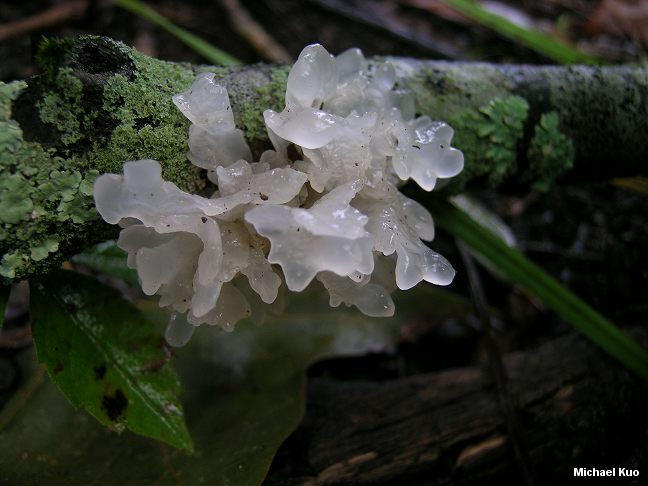
Above: Tramella fuciformus
Ganoderma applanatum (Artist's Conk)
Ganoderma applanatum are really interesting mushrooms being both parasitic and having medicinal properties. Artists conks are probably one of the most widely distributed mushrooms, most commonly found on fallen fir trees. Usually when parasitic, these conks attack bases of trees and later can be found along the tree, sometimes saprobic. The medical value of these mushrooms are comparable to that of Ganoderma lucidium (or shaga). Some being, anti-tumor, anti-inflammatory, anti-carcinogenic, and reducing phlegm. Ganoderma have been consumed by forum of tea for decades, possibly centuries ago. Often it is ground up and added to tea, then strained. One person who swears by its effects said, "You can feel its medicinal properties start working almost instantly like waves".


Wednesday, January 28, 2015
Pseudonym gelatinosum
The other day I was inspired by a friend informing me about Pseudonym gelatinosum. Pseudonym gelatinosum is a jelly mushroom that lacks much flavor and has a gelatin feel and appearance to it. The underside of the cap has these small teeth-like spines and appears to need a shave. These jelly mushrooms are saprobic on woody debris or well decayed conifer logs. I kept finding them near extremely mossy hillsides facing towards the direction of sun rise.


These mushrooms are known to be made into candy, jellies and soups. Most west coast versions of jelly mushrooms are edible, but some must be cooked before eating.
Saprobic - feeds on decaying or dead organic matter


These mushrooms are known to be made into candy, jellies and soups. Most west coast versions of jelly mushrooms are edible, but some must be cooked before eating.
Saprobic - feeds on decaying or dead organic matter
Monday, January 26, 2015
Amanita muscaria
Amanita muscaria are some of the most controversial mushrooms.Most people believe that they contain poison but actually is a deliriant of sorts. These red and white toadstools became popular after being depicted with Christmas themes. Reindeer were thought to have eaten them to be able to fly. There is much fantasy talk about them.


Its no wonder such fairy tales have been made. These mushrooms are mystical and you can tell just by looking at them.

Above: Button form possible Amanita muscaria var. guessowii
Below: Fully grown

Its no wonder such fairy tales have been made. These mushrooms are mystical and you can tell just by looking at them.
Chanterelle hunting in early fall

By far one of my favorite mushrooms to hunt for, is the Chanterelle. Its fresh apricot smell and the bright orange almost gold as a bell as it pushes up through the forest floor. Chanterelles are usually found near old logging roads where pines have been cut. The biggest yields I've found were near slopes in these previously described areas. They will grow as far as 20 feet or more in large amounts. As season gets toward the middle, they can be found at lower elevations in parks as well. I was surprised when I discovered over 50 chanterelles at a park in South Hill area of Puyallup. Much different than my usual hunting areas in the mountain parks.

Above: A trail of chanterelles can be found if you're the lucky person to be first in the area
Below: The usual habitat for good amounts of chanterelles

Below: Large harvest done in the prime of season.

http://www.seriouseats.com/recipes/2014/01/creamy-chanterelle-soup-recipe.html

Subscribe to:
Posts (Atom)